
ANECA participates in an EHU round table discussion on social impact
-
16/12/2025
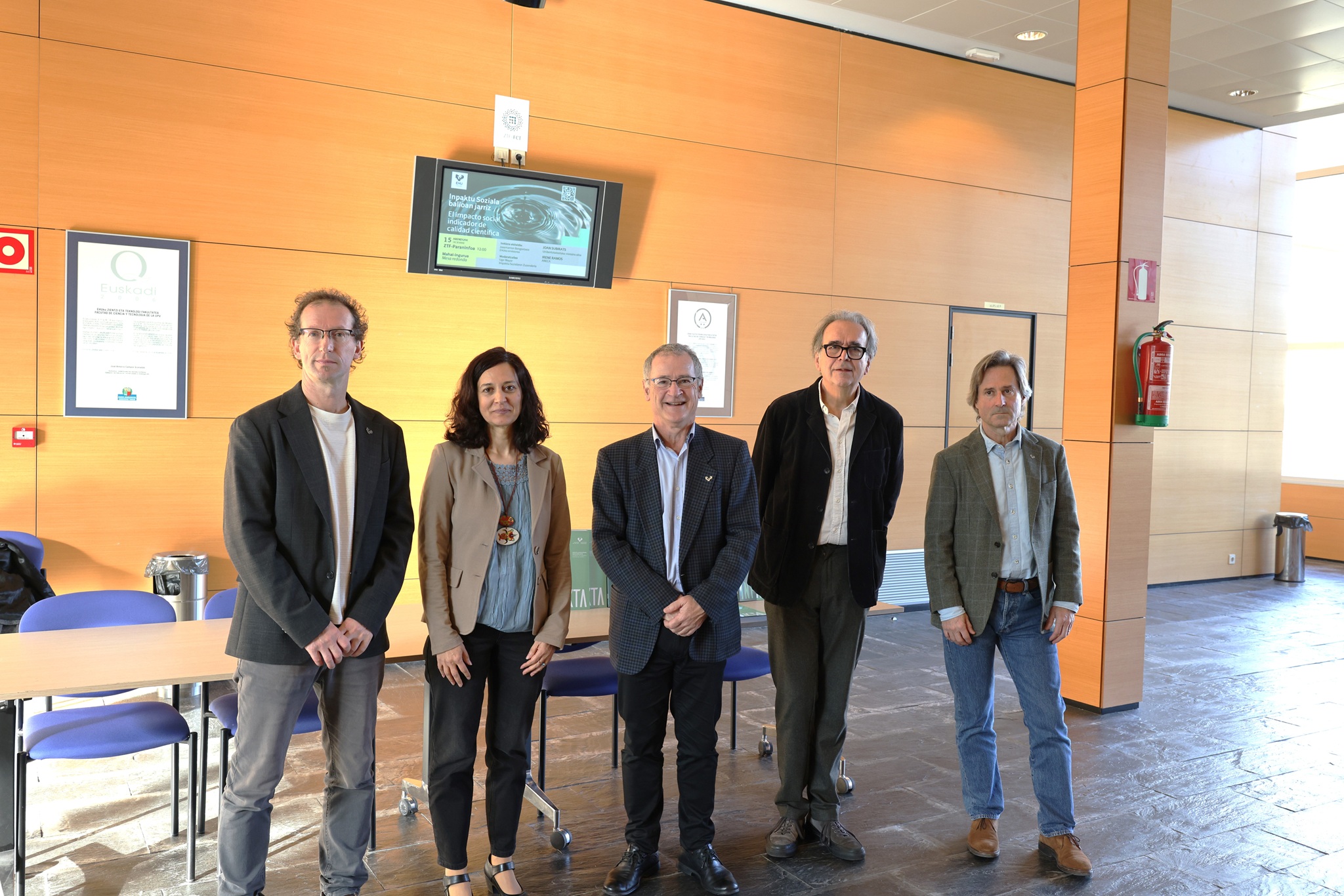
On Monday, December 15, a round table discussion entitled “Social Impact: An Indicator of Scientific Quality” was held at the University of the Basque Country's Leioa Campus, opened by Rector Joxerra Bengoetxea. The meeting, organized and presented by Ugo Mayor, Director of Social Impact at the University of the Basque Country and Ikerbasque Research Professor, was attended by Joan Subirats, former Minister of Universities between 2021 and 2023, and Irene Ramos Vielba, advisory member of ANECA. The session was part of the interest in promoting social impact at the EHU and allowed the speakers to compare their views and the role of social impact at the university.
Universities generate value by contributing, through their educational and research work and their social involvement, to economic development, social cohesion, democratic culture, and the response to major global challenges. The round table addressed the concept of the social impact of universities and its progressive incorporation into research evaluation systems, placing it within the advance towards more diverse, qualitative, and inclusive models. It also analyzed the difficulty of conceptualizing and measuring social impact, the risks of limiting oneself to easily quantifiable indicators, and the need to promote more coherent and shared frameworks (CoARA), in dialogue with international initiatives.
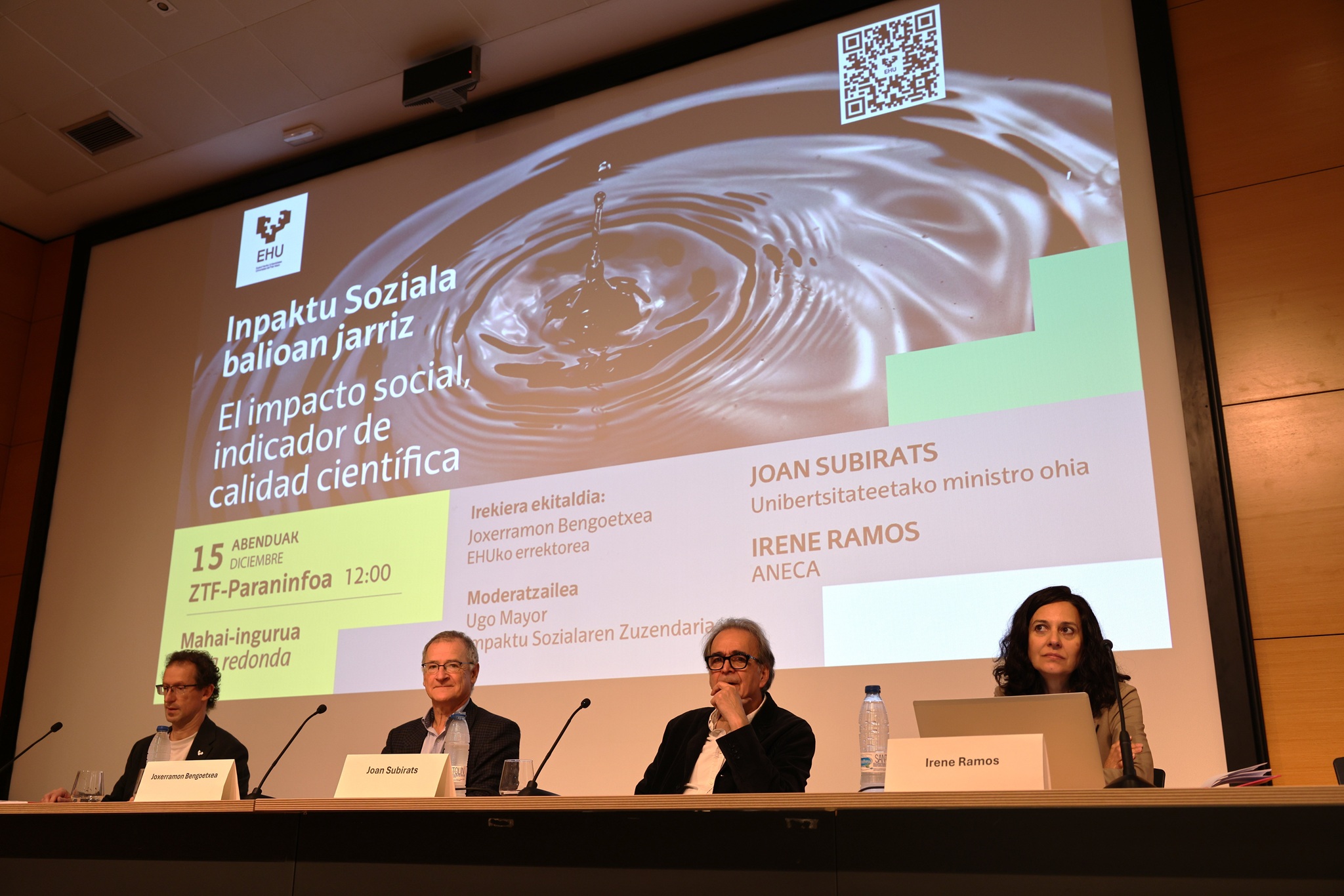
The debate also considered the prosocial motivations of the research community, which can be weakened by evaluation systems focused on productivity metrics, but are reinforced when institutions align themselves with social benefit objectives. The role of different social actors in generating and validating impact is relevant, including the definition of research problems and the co-creation of knowledge, based on the plurality and richness of their experiences. Finally, the relationship between science, politics, and society was reflected upon, defending a science committed to the common good, open to social dialogue, and capable of integrating productive and continuous interaction with non-academic actors in different forms and processes of research activity.